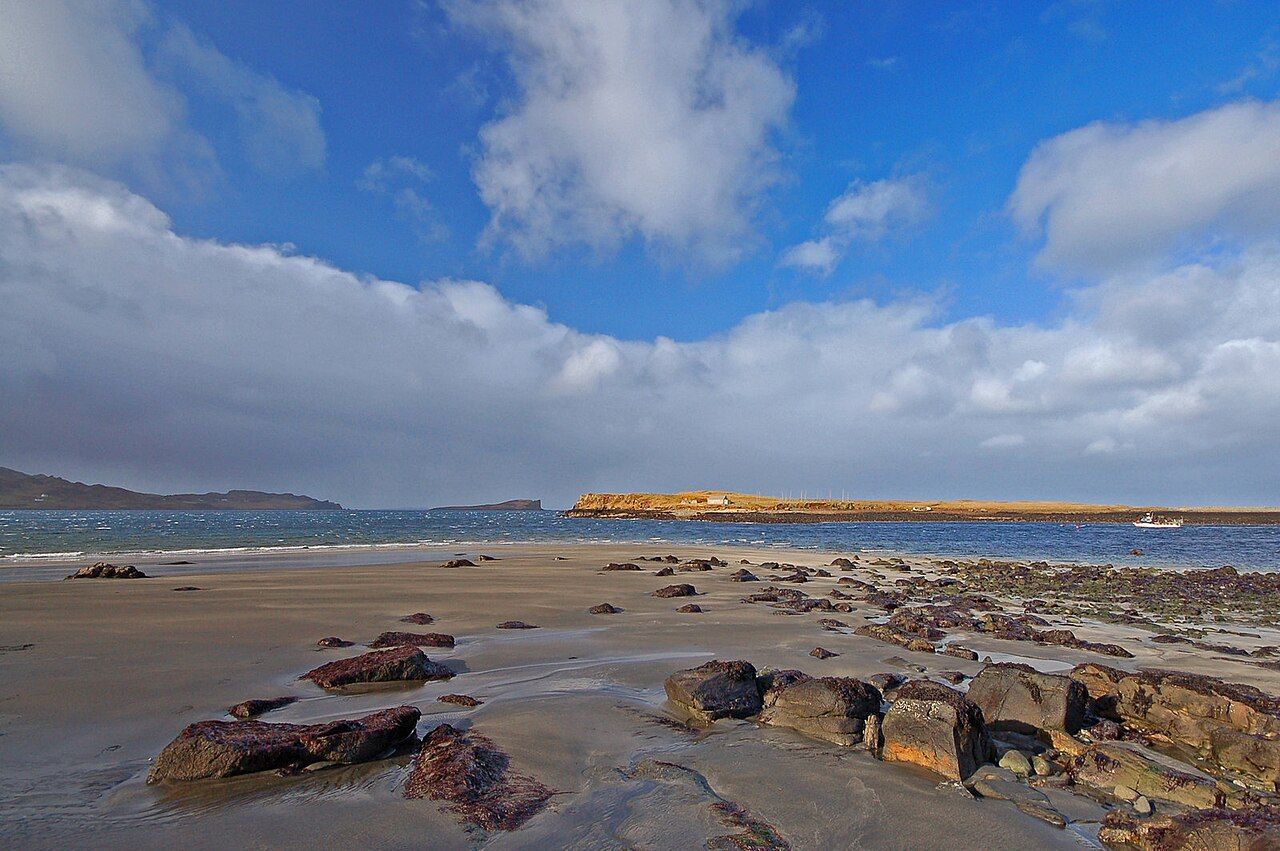
An Corran, Staffin — photo: John Allan
My dog-eared paper map gives An Corran, near Staffin, a small mark; the tide decides when the dinosaur footprints can be seen. They were left about 165 million years ago in the Middle Jurassic, a span of time that makes even a shoreline feel newly strange.
| Place | An Corran, near Staffin |
|---|---|
| Best seen | At low tide, when sand has washed off the rocks |
Some tracks were left by large plant-eating sauropods. That is enough to change the scale of the place in my mind: not a vague impression of ancient life, but footprints in rock, revealed as the sand washes away. The tide is part of the story here, not a detail to add afterwards.
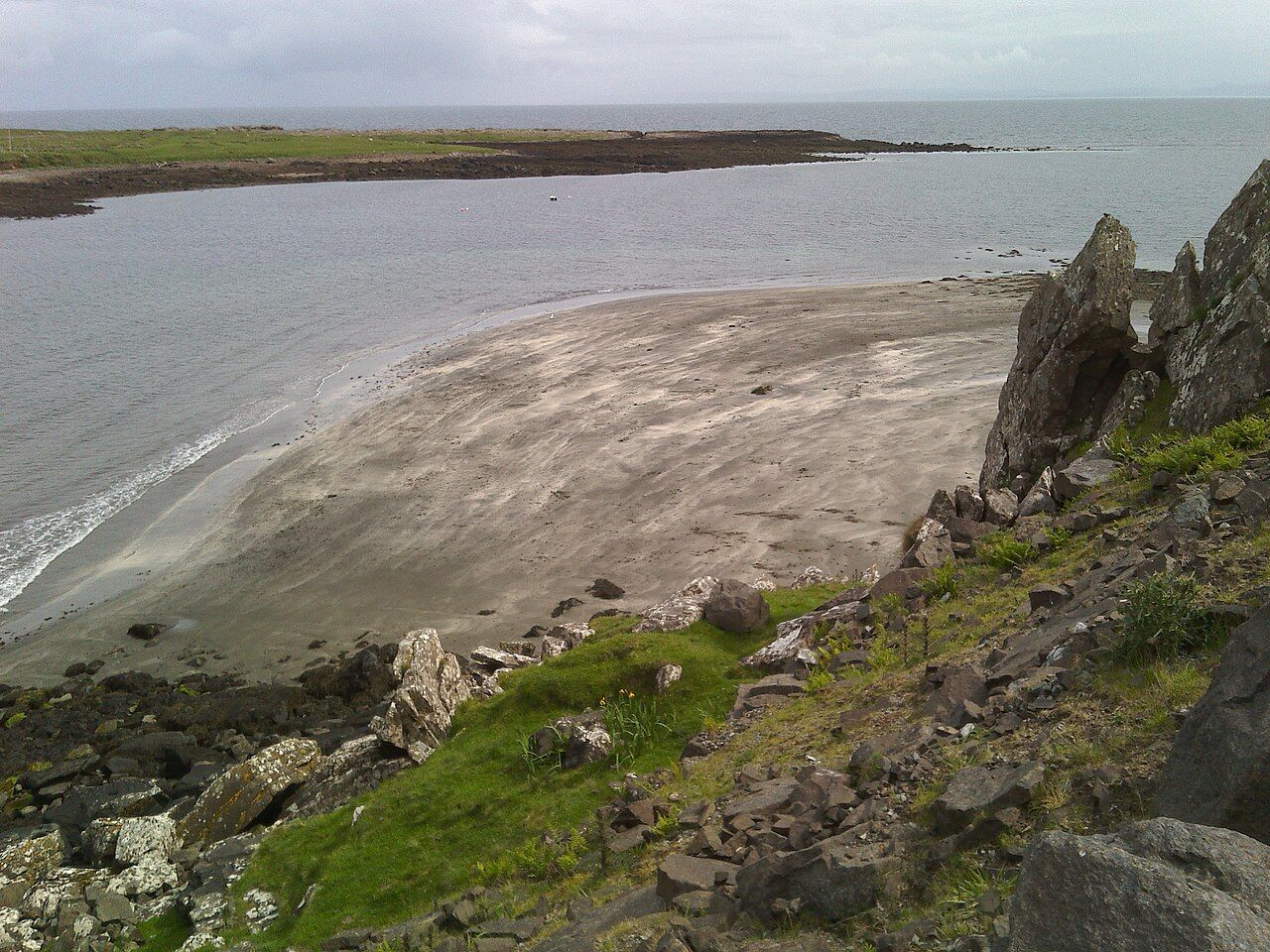
For Middle Jurassic fossils, Skye carries considerable weight in Scotland. A small museum in Staffin holds dinosaur fossils found on the island, giving the shore a quieter companion; I like that the footprints remain out in the open, with their outlines set into the rocks.
There are other island stories by the water too, including Seals on Loch Dunvegan. Some belong to sauropods, and all carry the weight of a time almost beyond imagining.
Uig, the bay and the ferries is worth a look as well.
At low tide, sand has washed off the rocks and the footprints are there to look for. The dog-eared map can stay folded for a while; the shore has its own markings.