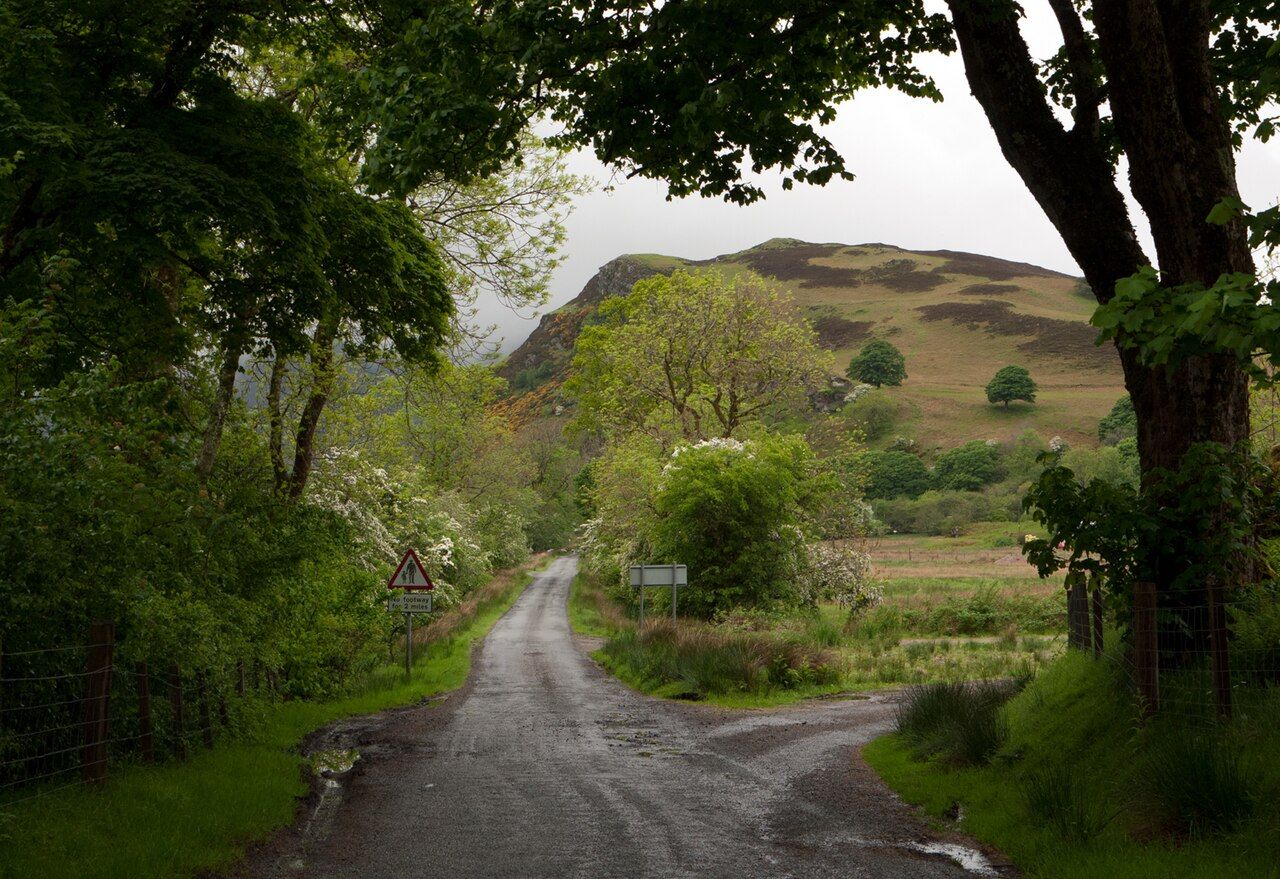
The road to the Glenelg ferry — photo: Trevor Littlewood
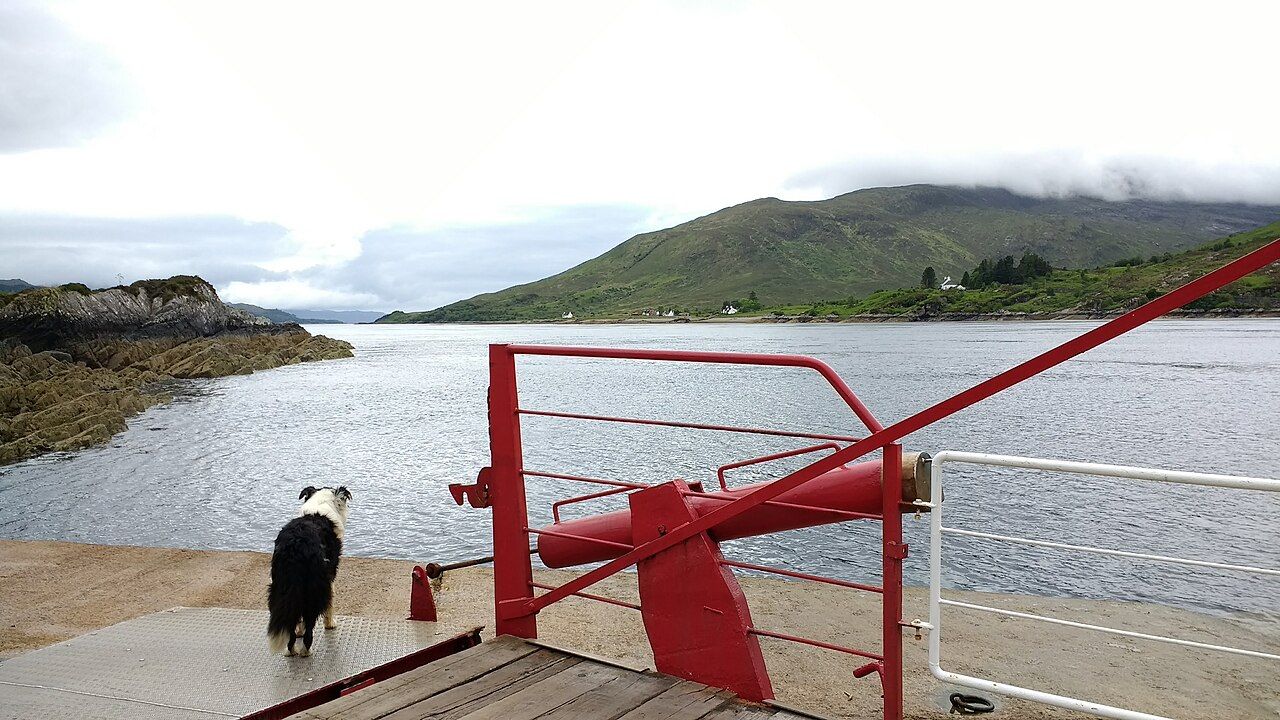
At Kylerhea, the small ferry crosses the narrows from Glenelg, and the crossing is so short that the water seems to hold the whole journey in one glance. It is a particular way to arrive on Skye: not by a long passage, but by a turntable ferry whose movement gives this small stretch of sea its own ceremony.
| Crossing | Glenelg on the mainland to Kylerhea on Skye |
|---|---|
| Season | Summer |
| Ferry | Scotland’s last manually operated turntable ferry |
| Road to Glenelg | Over the steep Mam Ratagan pass |
The facts are spare, but they make a strong little picture. A ferry crosses the narrows; it is manually operated; it turns; and then the journey is done. Its scale is part of its character, and the turntable gives that brief movement a shape worth remembering.
Glenelg is on the mainland, Kylerhea is on Skye, and between them is a short ferry journey that feels distinct from simply drawing a line across the water.
The ferry is the last manually operated turntable ferry in Scotland. That is the detail I find myself returning to: not just that it crosses, but that the crossing depends on a particular kind of vessel and a human operation. The words sound technical, yet the idea is plain enough. The ferry turns as part of its work, and the narrows are crossed.
The crossing is short, but it carries a long memory of how people and animals moved between these shores.
The crossing is short, but it carries a long memory of how people and animals moved between these shores. Cattle were once swum across the narrows at Kylerhea on their way to mainland markets. It is an older, harder picture than the ferry, and the same narrow water makes both journeys imaginable without making them the same.
There is something arresting in that change of means. The cattle went through the water under their own power; now the small ferry makes the crossing, turning between one shore and the other. I do not need to claim more than that. The history held here is already enough: a route across the narrows, used for animals headed towards markets on the mainland.
The road to Glenelg crosses the steep Mam Ratagan pass, which gives the approach its own weight in the story. The sea crossing may be very short, but the road on the mainland rises over a pass before it reaches Glenelg. I like that contrast: a steep road on one side of the journey, a brief ferry passage at its centre.
It becomes a pause in the line, a place where the route changes from road to water and then back again. The map cannot show the feeling of a turntable ferry, but it can remind me that this is no ordinary straight crossing.
The otters often seen near Kylerhea belong to a different sort of attention. They are not the ferry’s purpose, and they do not need to be made into an attraction in the telling; they are simply part of what is often seen here. That small fact sits easily beside the working crossing, each belonging to the same place in a different way.
The back road of Sleat is another thread to follow in the mind, and [the back road of Sleat] sits naturally beside a crossing that keeps its own scale. The name [Flora MacDonald] draws the thought elsewhere, towards another strand of Skye’s stories, while the ferry remains here, short and practical between Glenelg and Kylerhea.
There is a temptation, with a place reached by a ferry, to make the passage seem like the whole point. Here it is enough to let it be what it is: a small crossing, a turning vessel, a route between the mainland and Skye. The fact that it operates in summer belongs in the same plain account, without adding a timetable or pretending that the water has been crossed for longer than it takes.
What stays with me is the scale of the thing. Scotland’s last manually operated turntable ferry sounds like a grand distinction, while the crossing itself is very short; both statements are true together. The description gives the ferry its place, and the short passage keeps the story close to the water and the two shores it joins.
Kyleakin and Saucy Mary is worth a look as well.
The ferry makes its turn, the narrows are crossed, and the map keeps its crease where the sea lies between the names.