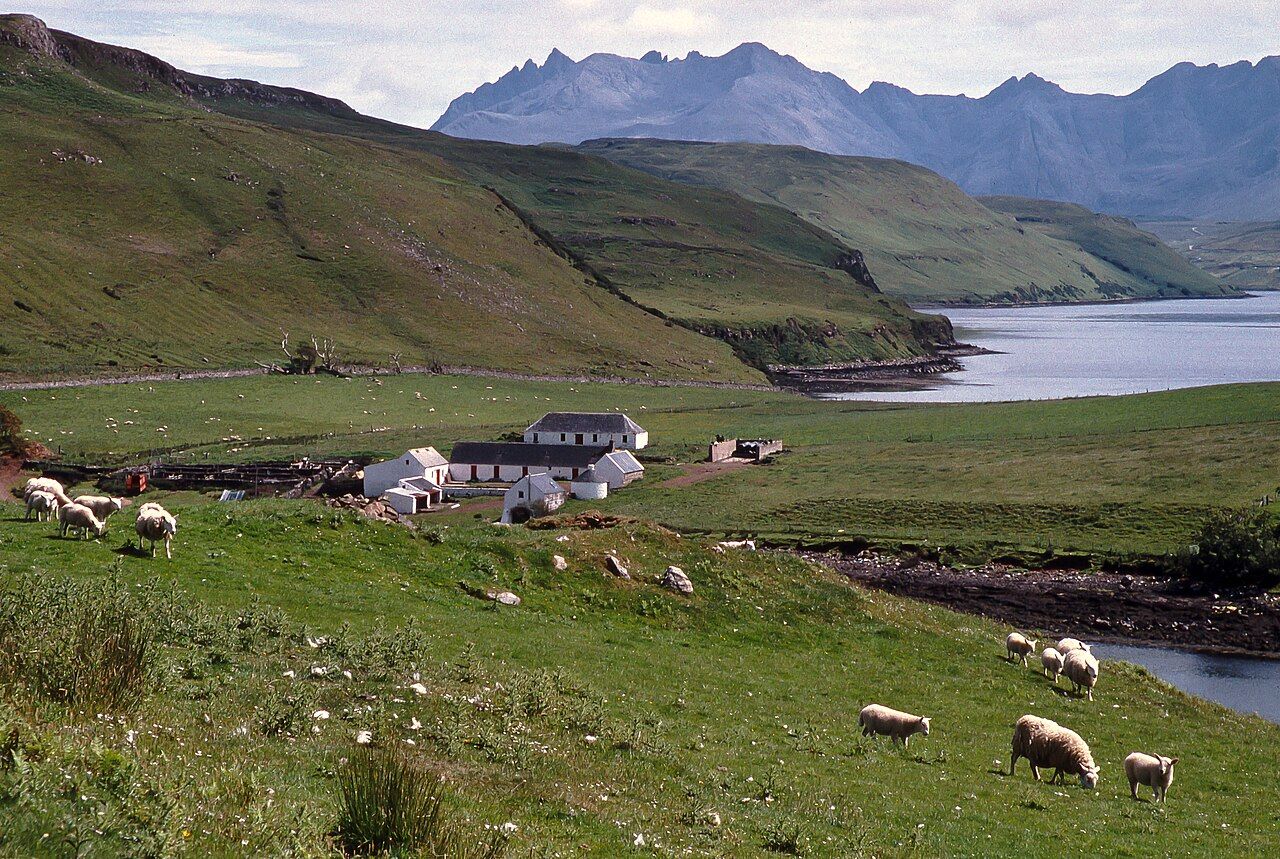
Farms by Loch Harport — photo: Heikki Immonen
I find myself lingering over them, because a name can make the past feel close without explaining it all.
| Place | Skye |
|---|---|
| Norse rule | Around the ninth century to the thirteenth century |
| Orbost ending | -bost means a farm |
Norse settlers ruled Skye from around the ninth century until the thirteenth, and their names remain across the island. The ending -bost, as in Orbost, comes from the Norse word for a farm; that small piece of language gives the name a particular weight.
The Battle of Largs in 1263 was followed by the Treaty of Perth in 1266, which gave the Hebrides to Scotland. Skye was then held by Scottish clans. The change in rule is clear enough; the names, though, do not fall into neat historical boxes.
Even Skye itself may carry a name older than the Norse. I like that uncertainty: it leaves room for a deeper past without asking a visitor to settle what the name means. Round here, the map can offer a history in a handful of syllables, then leave the rest open.
What Skye Eats: Seafood, Lamb from the Crofts and Island Food is worth a look as well.
I fold my dog-eared map back along its familiar creases, with Uig, Staffin, Sligachan and Orbost still legible. Their sounds belong to the island as much as the lines between them.