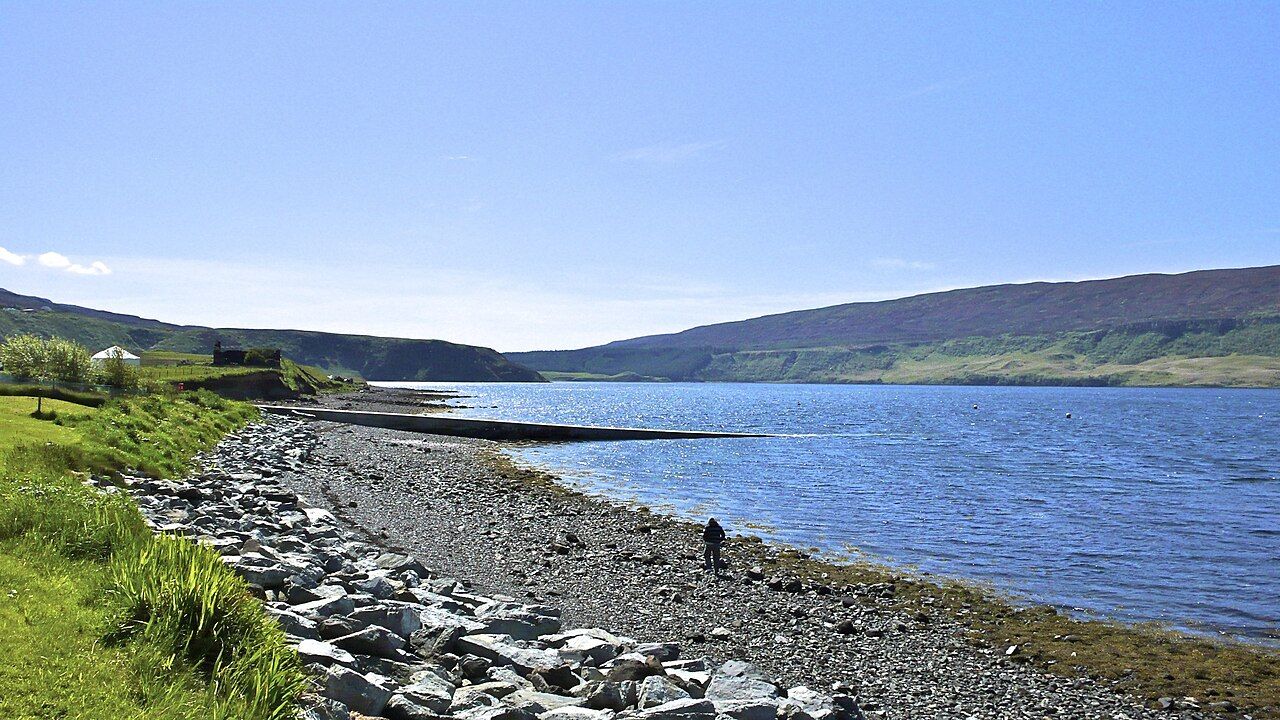
The slipway at Stein, Waternish — photo: Anthony O'Neil
A croft is a small agricultural unit in the Scottish Highlands, usually rented; on Skye, crofting is central to life in many townships.
| Land | Usually laid out in long narrow strips |
|---|---|
| Grazing | Shared on the hill |
| Work | Sheep, a few cattle, often other jobs |
It is tempting to look at a croft as a small farm, and that is what it is, but the word also carries the arrangement of the land and the way it is worked. The narrow strips are not an incidental pattern; they are part of how a croft is laid out. My map gives me a simple way to hold that shape in mind, though the idea is clearer than any map can make it.
The smallness is part of the definition, but it does not make the arrangement slight. A croft has a place in a larger pattern: land in strips, animals kept by crofters, and grazing shared on the hill. The pieces are easier to hold together than to separate. Crofting is not simply a name for a patch of ground; the way land is held and used sits alongside the work that happens on it.
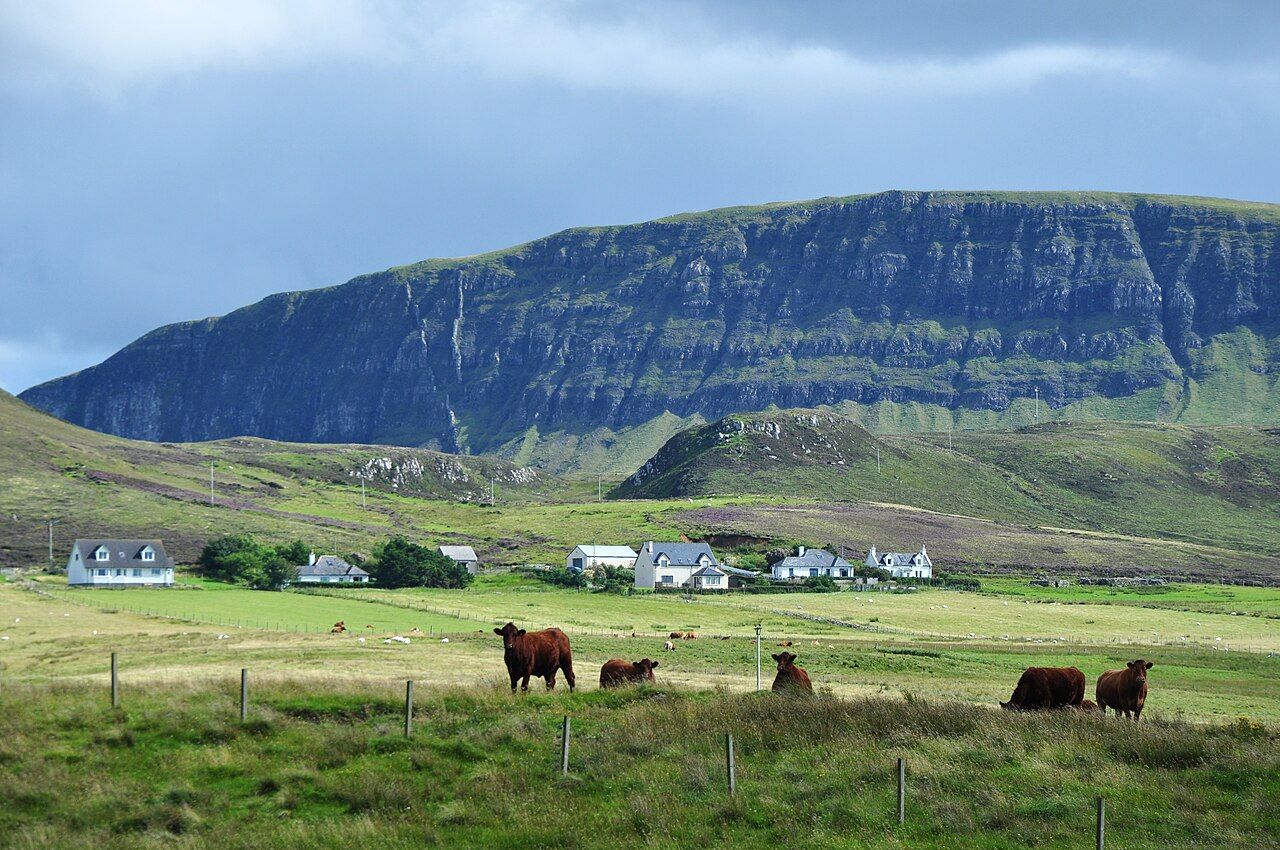
Crofters typically keep sheep and a few cattle. The word typically matters: this is a picture of the usual pattern, not a claim that every croft has exactly the same animals or works in precisely the same way. Many crofters also have other jobs. That detail belongs in the picture, rather than being treated as a footnote to farming; crofting is work, but it is not necessarily the only work a crofter does.
The shared grazing on the hill is another part of the arrangement. Crofters share it, so the croft is not only a private-looking strip when considered on its own. There is also common ground in the working picture. That combination of long, narrow units and shared hill grazing is worth keeping together: either detail alone leaves out part of how crofting works.
Midges on Skye: the small facts that matter is worth a look as well.
The Crofters Act of 1886 gave crofters security of tenure and fair rents. Those are plain words with a substantial place in the story: security of tenure and fair rents are the protections named in the facts of crofting’s history. I find it useful to keep the date beside the arrangement, rather than treating the strips as a pattern detached from the people who work them.
The strips are not an incidental pattern; they are part of how a croft is laid out.
The strips are not an incidental pattern; they are part of how a croft is laid out.
A visitor can come away with the outline without pretending that every detail of an individual croft is the same. A small agricultural unit, usually rented; sheep and a few cattle; other jobs often alongside; shared grazing on the hill. The outline is spare, but it gives the land a working logic.
It matters, too, that crofting is central to life in many Skye townships. That is a stronger statement than saying it is part of the scenery, and a more useful one for anyone trying to understand what the pattern means. Crofting belongs to township life, not just to a visitor’s view of small farms. The land and work are tied together in the name itself.
I like the plainness of the word croft: it does not promise a grand scale, and it does not need one. Its meaning holds a small unit, a usual pattern of animals, work beyond the farm for many, and grazing shared on the hill. The Crofters Act of 1886 sits in that account as a change in security and rent, not as decoration for it.
They are not simply lines to follow across Skye; they belong to a form of small agriculture, shared grazing and township life that remains central in many places. That is enough to make the map stay open a little longer.