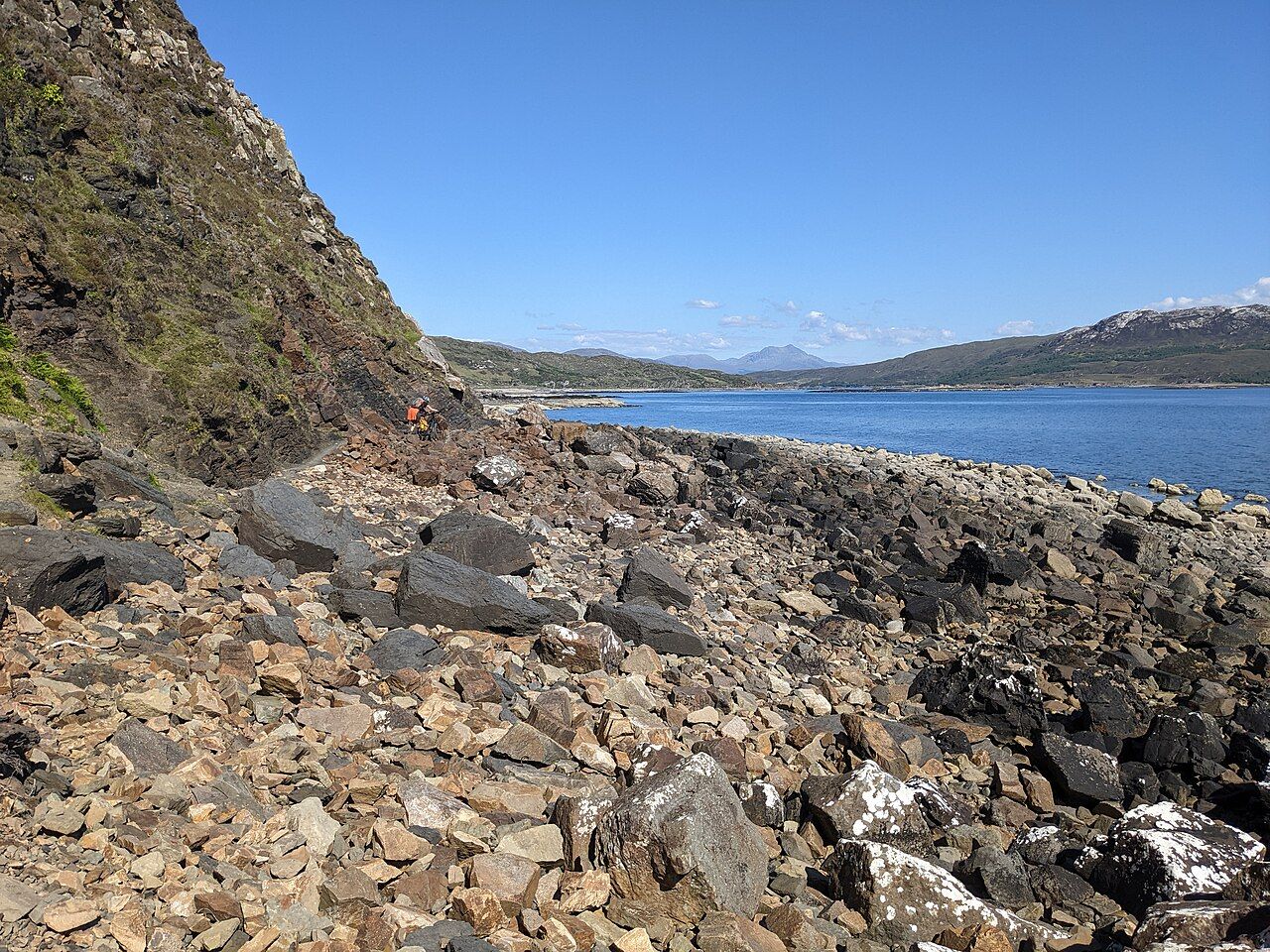
Boulders below the path to Boreraig — photo: David Medcalf
Their names belong to a harder story than a line on paper can carry: the emptying of townships on Skye during the clearances.
On paper, names can seem settled, simply there to be read and remembered. The history behind these names is not so still: people were evicted, townships were emptied, and many families left Skye altogether. I find the map useful for keeping the places in view, but it cannot give those losses their full measure.
| Place | What remains |
|---|---|
| Boreraig and Suisnish, on the Strathaird side | Ruined houses and field walls |
| Walk from Kilbride | Passes both ruined townships |
In the Highland Clearances, landlords evicted tenants to make way for sheep farms. It is a plain sentence, but there is no plainness in what it describes: people made to leave the homes and townships where they had lived.
The cause matters, because it keeps the story from becoming a general sadness about change. These evictions were made to clear space for sheep farms; the people who had lived there were not simply watching a landscape alter around them. They were being made to leave it.
Boreraig and Suisnish were cleared in the 1850s. That date gives the change a place in time, but the ruined houses and field walls still visible there keep it from becoming only a date, safely shut away in a book.
The Potato Famine of the 1840s also hit Skye hard. It belongs beside the clearances in any account of what shaped this place, though the facts are distinct: famine, eviction, and the loss of home are not interchangeable things.
Many Skye families emigrated to Canada, Australia and the United States. The words are familiar from histories of departure, yet they carry more weight when set beside the names of townships that were emptied.
Those destinations make the scale of departure plain without making each family’s story the same. It is enough to know that many Skye families went, and that Boreraig and Suisnish are among the places whose emptying can still be approached on foot.
A walk from Kilbride passes both ruined townships. There is something direct about approaching the story on foot: the route does not make the past easier, but it brings the names and what remains of them together.
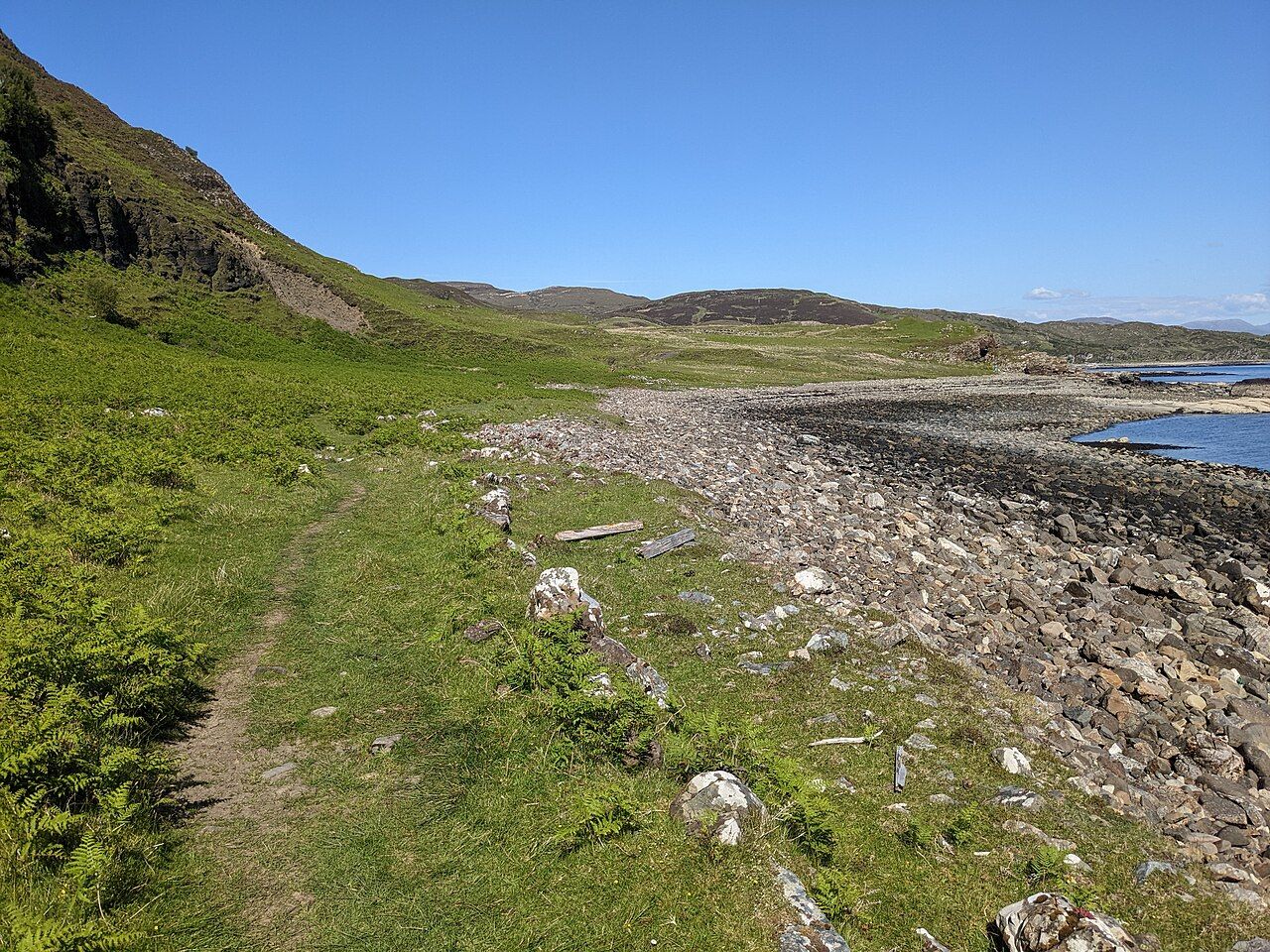
The walk gives the story a physical address, rather than a view of Skye as a single, undivided place. I would rather keep the particular names in mind than let the broad word ‘clearances’ flatten them into one event without places attached.
The ruins are not an answer to the whole story; they are what remains visible of two cleared townships.
The ruins are not an answer to the whole story; they are what remains visible of two cleared townships.
Houses and field walls are modest evidence beside the scale of eviction and emigration, and I would not ask them to explain more than they can. Still, their presence gives the story a place to rest in the mind.
The clearances were not a single abstraction, but the eviction of tenants for sheep farms, and the removal of families from the places they called home.
On the Strathaird side, Boreraig and Suisnish offer a way to meet that history without pretending that a visit can contain it. The walk passes both, and the ruined houses and field walls remain there to be seen.
Midges on Skye: the small facts that matter is worth a look as well.
The pace of the walk belongs to the day as well as the ground; Skye weather is part of the practical thought that travels with any walk here.
I keep coming back to the difference between seeing a place and understanding all that happened there. The visible remains are enough to make the clearances difficult to treat as distant, and not enough to settle the story.
That is why I do not want the ruins to stand in for every person who left, or for every family affected by the Potato Famine. The facts give us a few firm points: the evictions, the sheep farms, the names of the townships, and the journeys many families made away from Skye.
So the names stay with me: Boreraig and Suisnish, on the Strathaird side, passed on a walk from Kilbride. Ruined houses, field walls, and a history of eviction and departure; no map can make that smaller.