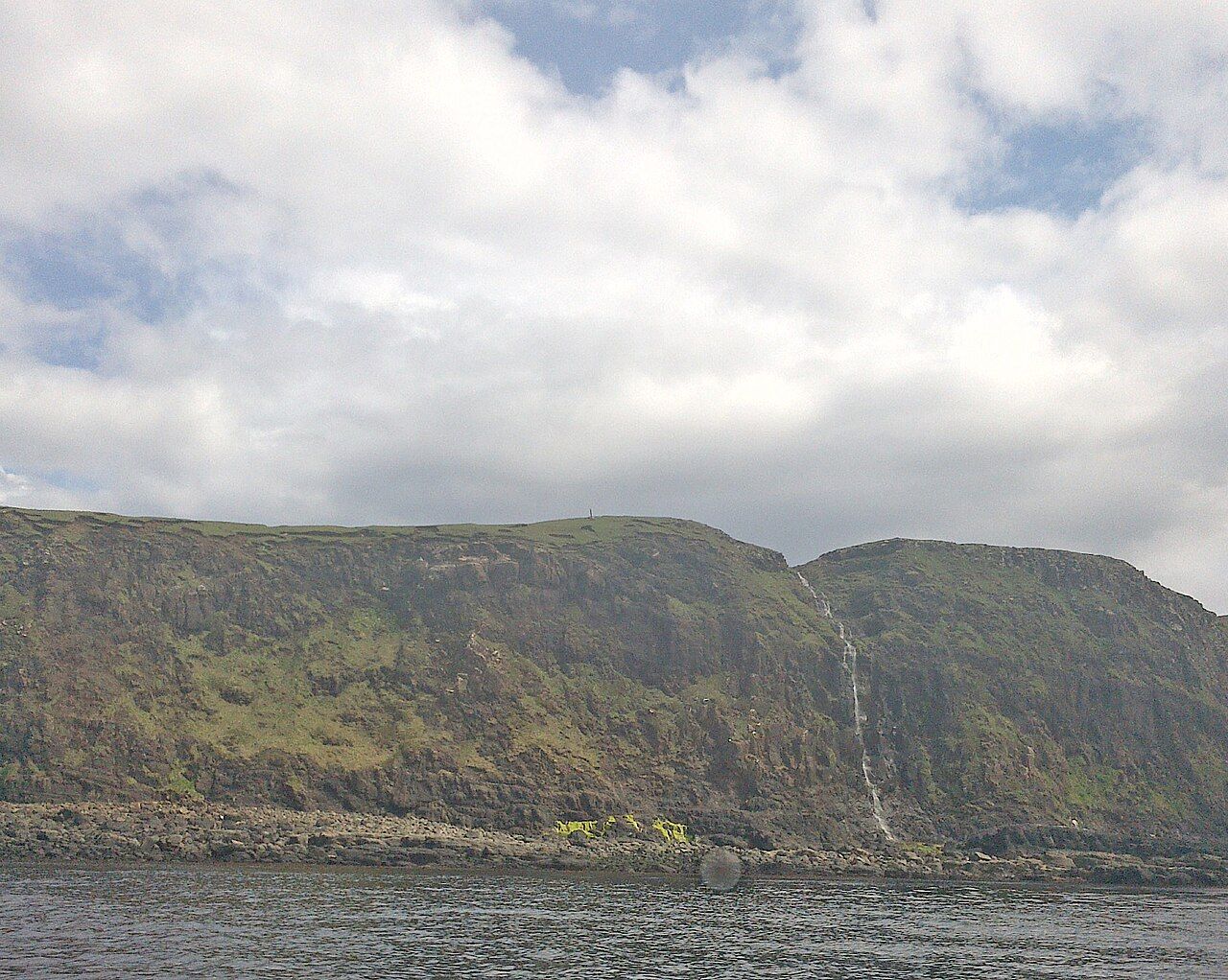
A waterfall on Waternish — photo: thejackrustles
White houses at Stein sit on Loch Bay, and Waternish begins for me with that plain image: a village, a bay, and a peninsula in the north-west of Skye.
| Place | Waternish |
|---|---|
| Position | A peninsula in the north-west of Skye |
| At Stein | A village of white houses on Loch Bay |
| Ruins | Trumpan Church and townships from the clearances |
The ruined townships and the church are not separate curiosities, set out for easy consumption; they ask for a little time, and for attention to what a ruin does and does not tell.
Waternish is a place visitors can approach through its surviving names and remains, though neither gives a complete account. I keep the paper map folded open at the peninsula, and find the marked outline easier to read than the silences inside it.
The townships lie ruined from the clearances. That is the fact to hold on to, without smoothing it into a vague old story or pretending that a row of stones can explain the people who lived there. The empty places remain part of Waternish’s character, not scenery to pass over quickly.
On the map, a township is easy to reduce to a mark, and a ruin to something passed on the way elsewhere. That is a poor measure of either. The word clearances carries a history larger than the stones can tell, while the stones remain part of what is here now. I find myself returning to the paper map, not for an answer, but because its clean lines make the gaps visible. It cannot put back what is absent, and it cannot settle what the place means.
Round here, I have a strong preference for the places that leave room for thought, and Waternish does that without needing an embellished account. The ruins do not offer a complete picture; perhaps the honest response is to notice that absence, rather than fill it with a story of our own.
The peninsula’s most difficult history is held at Trumpan Church, near its end. In 1578, MacDonalds from Uist set fire to the church while MacLeods were inside; the detail is stark enough without any added drama.
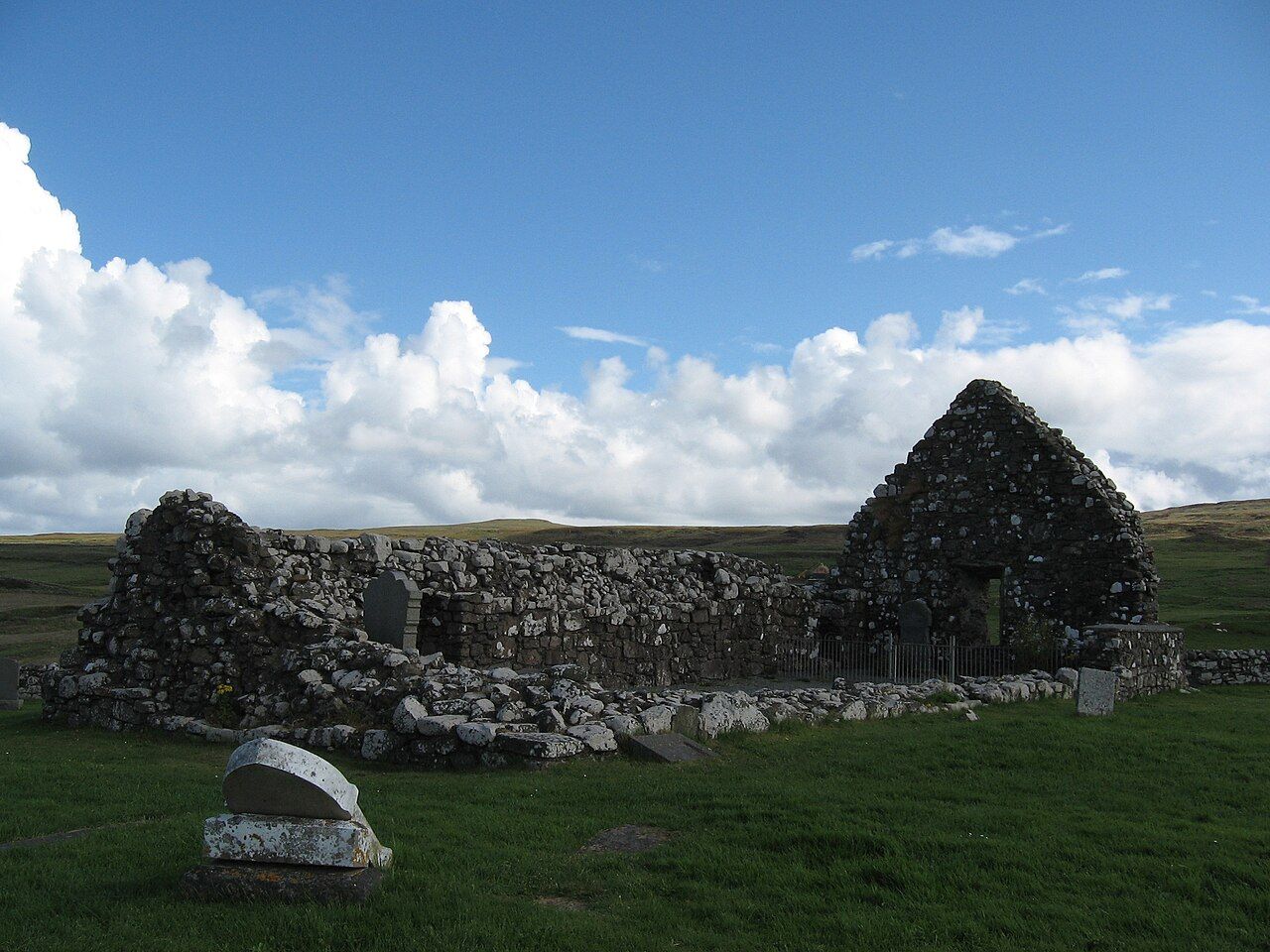
MacLeods arrived and killed most of the attackers in the Battle of the Spoiling of the Dyke. Even the name carries a hard edge. I would rather leave the event in its exact terms than dress it up with guesses about what was said, felt or seen.
The church and the battle belong together in the telling, but they should not be made into a grand spectacle. A visitor can stand with the simple facts: a church near the peninsula’s end, a fire in 1578, and a battle that followed.
That restraint matters to me. It keeps the account from turning people into parts in a scene, and lets the name Trumpan Church remain a place-name as well as a reminder of what happened there.
Stein offers a different kind of image: white houses on Loch Bay. I like its plainness beside the harder history elsewhere on the peninsula. It is not a resolution to the past, nor does it need to be; it is simply the village the facts give us.
Waternish is a shape on paper, but the church, the village and the ruined townships each bring a different measure of human presence to it.
The link to Armadale and the Sleat peninsula makes me think about how much a name can carry before a visitor has learned its story. I would rather leave that thought open than force a comparison between places.
There is a temptation, with ruins, to make the past sound tidier than it was. Waternish resists that: the townships are ruined from the clearances, and the account of Trumpan is precise, painful and brief.
So the paper map stays dog-eared, its marks useful but never the whole account. On Waternish, Stein’s white houses, the ruined townships and Trumpan Church are enough to hold in mind together, without insisting that they make a simple story.
Neist Point: the lighthouse at Skye’s western edge is worth a look as well.