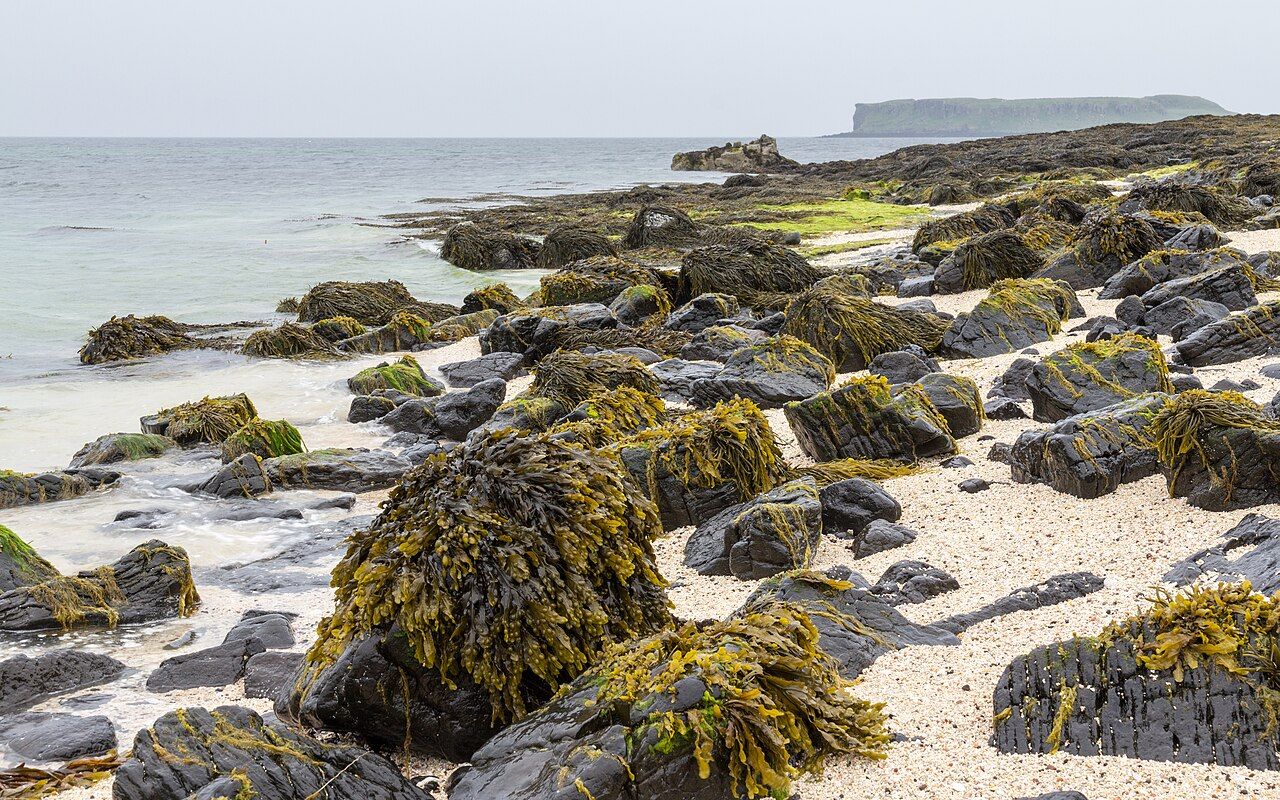
The coral beach at Claigan — photo: JoachimKohlerBremen
I have to catch myself at the name: coral beaches. These white beaches near Claigan are made of the bleached skeletons of maerl, a seaweed, not true coral. That correction changes the way I look at them; it does not make them any less lovely.
| Place | Claigan, north of Dunvegan |
|---|---|
| Beach material | Bleached skeletons of maerl |
| Path | About two kilometres |
| Offshore | Isay |
| At low tide | Lampay, a small tidal island, is reachable on foot |
The name coral is an understandable first impression, and a useful one only up to the point where it starts to tell the wrong story. There is no true coral here. There is maerl, bleached and broken into the material that gives the beaches their white colour, while the water takes on a light green one. The words are plain; the combination is not.
That is the thing I keep returning to: not a grand explanation, but the small distance between what a place seems to be and what it actually is. A white beach might prompt one familiar answer, and the light green water might seem to confirm it. Then comes the less familiar word, maerl, and the scene has a different beginning.
The beaches lie near Claigan, north of Dunvegan, and a path of about two kilometres leads to them. I like the modesty of that fact beside the colour: the path is not a grand claim, and the place does not need one. A measured walk and a clear account of what the shore is made from are enough to set the mind moving towards it.
There is a pleasure in knowing the material without turning the visit into a lesson. Maerl is a seaweed, and the white is made from its bleached skeletons; those facts make the beach more itself, not less. The colour does not have to stand in for something else. It belongs to what is actually there, and I would rather keep that knowledge with me than let the word coral do all the talking.
The dog-eared paper map has room for names such as Neist Point and Eilean Donan across the water, but Claigan asks for a different sort of attention. Here, the details are already close together in the mind: white sand made from maerl, the light green water, and Isay lying offshore. There is no need to enlarge the view with invented drama.
Isay is an island offshore, a simple fact that gives the view another point to settle on. I find that enough. The eye can move from the white of the beach to the light green of the water, then out towards the island, without needing a list of things to do or a story added over the top. It is an arrangement whose character comes from the details themselves.
The phrase “coral beaches” will probably remain the easy name to remember. I do not mind the shorthand, so long as it is followed by the correction. They are not made of coral; they are made of bleached maerl. For me, that is the better version of the story, because it leaves the colour intact and gives it an origin that belongs to this place.
The colour begins with what the seaweed leaves behind.
When the tide is low, Lampay, a small tidal island, is reachable on foot. I like the precision of that sentence: at low tide, and not as a general promise. Lampay is not just another name offshore; it is a small island reached on foot when the tide is low. That gives the visit a different kind of possibility, one governed by the wording of the fact itself.
It is tempting to make a list of what the beaches offer, but lists can flatten a place before you have properly looked at it. Here, I would keep the pieces separate for a while: maerl, the white colour, the water's light green, Isay offshore, and Lampay at low tide. They belong in the same account, but they do not need to be hurried into one impression.
I see the word maerl doing its quieter work, and a shore whose colours are already enough. The path leads to the beaches; beyond them, Isay lies offshore, while Lampay can be reached on foot at low tide. The facts do not crowd the view. They give it its proper names.
The colour begins with what the seaweed leaves behind.
That is where I leave the coral beaches: not with the easy name, but with the correction beside it. Near Claigan, north of Dunvegan, bleached maerl makes the beach white and the water light green. I can fold the map around those details and let the place remain just as specific as it is.
MacLeod’s Tables and the Maidens is worth a look as well.