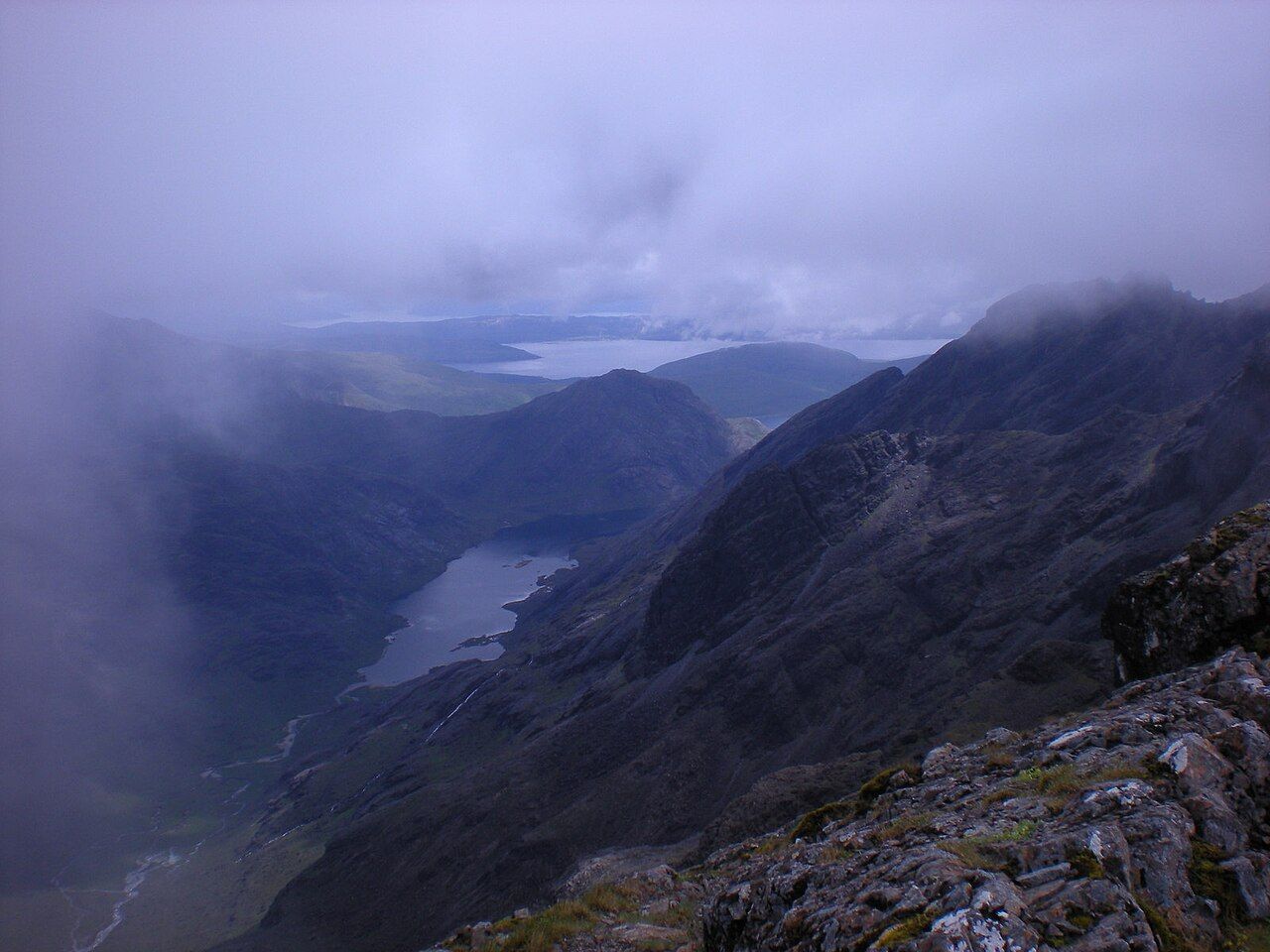
Loch Coruisk in cloud — photo: Martyn Ayre
Loch Coruisk sits among the peaks of the Black Cuillin, a freshwater loch held within a ring of dark mountain forms. The scene has a blunt clarity: water, rock, and the mountains around it, with little need to explain why this place has stayed in people’s minds.
| Approach | Boat from Elgol or a long walk |
|---|---|
| Boat landing | A jetty on Loch Scavaig |
| From the jetty | A short walk to Loch Coruisk |
The boat journey from Elgol gives the loch an arrival point at Loch Scavaig, not at the edge of Coruisk itself. From the jetty, it is a short walk onwards; the distinction is simple, but it belongs in the picture of the place, rather than in small print beneath it.
I find that small separation worth keeping clear, because the boat landing and the loch are not the same place. Loch Scavaig has the jetty; Coruisk lies a short walk beyond it, among the Black Cuillin.
There is another way in, by a long walk, and the two approaches leave different impressions in the mind. One brings the boat to Loch Scavaig and the loch within reach; the other asks for a longer passage on foot. A different crossing is described as over the sea by Kylerhea; here, the choices are a boat from Elgol or a long walk. Neither changes the essential fact of Coruisk: the Black Cuillin surround its freshwater, and the mountains are not a distant frame.
It can mark the route, and I like having that small, familiar certainty in hand; the place itself is made from a larger, harder arrangement of water and mountain.
Round here, a landscape can be famous without becoming any easier to describe. Loch Coruisk has a place in writing and painting: Sir Walter Scott described it in The Lord of the Isles, and J. M. W. Turner painted it. Those are distinct ways of meeting the same subject, and neither needs dressing up with claims about what the loch ought to mean.
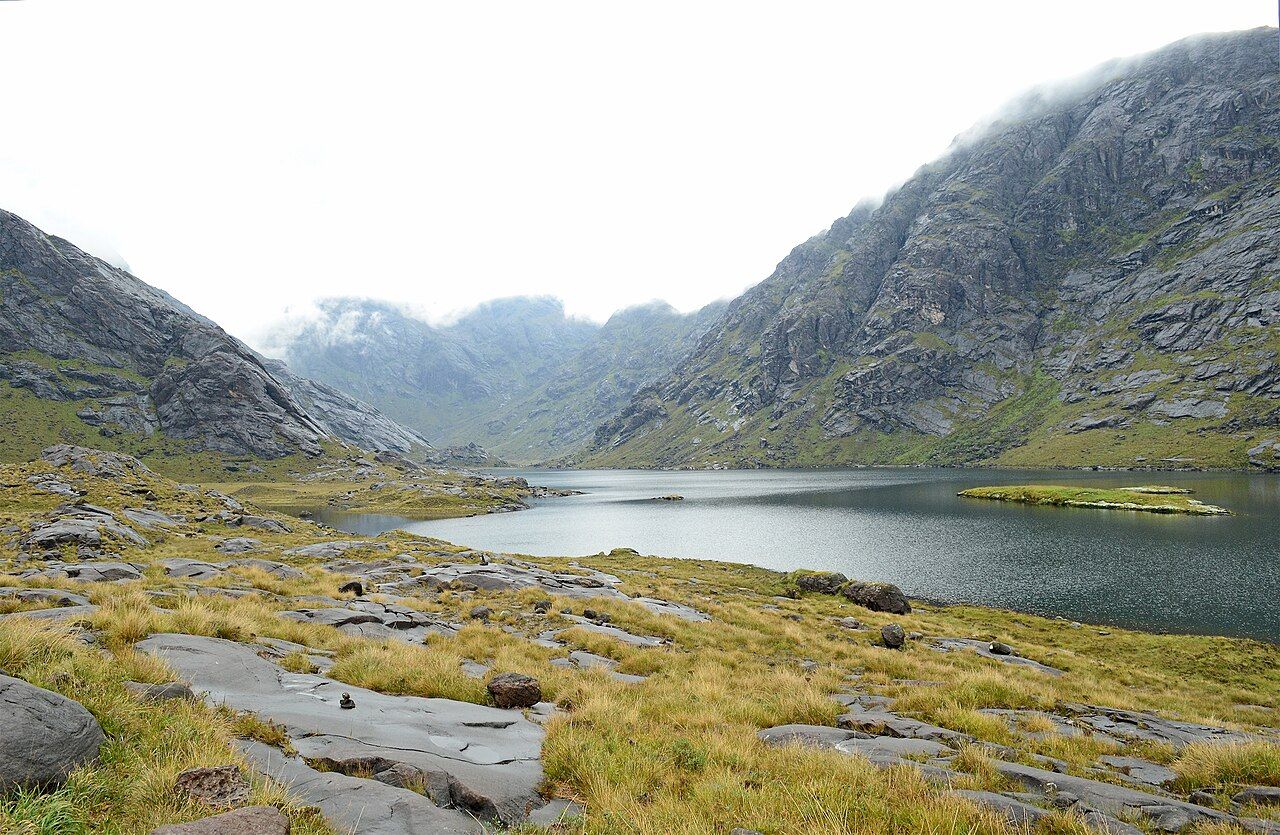
Scott’s poem and Turner’s painting give the place a cultural presence beyond its physical setting, but the setting remains the main thing. A freshwater loch surrounded by the Black Cuillin is already a precise description; the old works add another layer, not a replacement for the water and the peaks themselves.
The Red Cuillin: Granite, Scree and the Glamaig Race is worth a look as well.
At Loch Scavaig, seals rest on the rocks. It is a detail worth holding alongside the scale of the mountains: the place is not only a composition of peaks and water, but also a shore where seals settle. My paper map has no way to make that distinction vivid; it remains a small printed shape against the larger scene.
The route on foot from Camasunary brings its own particular care at the Bad Step, a rock slab on the coastal path. That is the sort of fact I would rather keep plain. The name is memorable, but it is the slab and the need for care that matter when the walk is part of the approach.
For all the attention drawn by boat access, the short walk from the Loch Scavaig jetty is still part of reaching Coruisk. It keeps the arrival from being a single point: first the landing, then the walk, then the freshwater loch among the Black Cuillin. The map can hold those parts together, though not their scale.
It is tempting to turn the place into a list: loch, peaks, jetty, seals, poem, painting, path. But that would flatten what makes the facts belong together. Coruisk is both a destination reached by boat or a long walk and a place held inside the mountains; the route and the setting are inseparable in the way it comes into view.
Even the practical details lead back to the same small geography. Boats from Elgol land at Loch Scavaig, and the loch is a short walk away; from Camasunary, the coastal path passes the Bad Step, where care is needed.